REACH Realising Everyone’s Access to Community Help
Realising Everyone’s Access to Community Help (REACH) was established in 2023 and is the result of a fantastic collaboration by the VCSE Mental Health Alliance spearheaded by Rethink Mental Illness of over 70 local providers that include members of the Cultural Inclusion Network such as Inini, Sahil, Ambacare, the Tamarind Centre, and Coventry Muslim Forum. This innovative collaboration of services has opened up the opportunity to move away from disjointed and silo working to a new integrated, flexible, responsive and personalised model of care for adults with severe mental health needs who are either waiting for secondary care Mental Health Services or are being discharged.
As part of our commitment to creating meaningful pathways from participation into employment, Arty-Folks welcomed Rory McDermott, at the time a service user, to the staff team as our REACH Peer Support Worker. Drawing on his lived experience, Rory provided one-to-one support to adults aged 18+ in South Warwickshire who were referred to us by NHS CWPT Mental Health Services. His appointment strengthened our peer support model by demonstrating how lived experience can become a valuable professional asset, while also creating a clear progression route from receiving support to supporting others.
The REACH Peer Support Service came to an end in September 2026. In his reflection, Rory shares what the service achieved for the people he supported, as well as the impact the role had on his own personal and professional development.
“When Arty-Folks described to me the role as REACH Peer Support Worker, I knew it was something I had to go for. REACH aimed to move away from the model of separate mental health services and endless waiting lists and instead provide an adaptable and personalised approach. Designed for adults with mental health issues who were waiting for specialist support or have recently been discharged, my role as Peer Support Worker was to offer one-to-one support to each patient referred to us by NHS mental health professionals in South Warwickshire. The main goal was to help their most vulnerable patients access non-medical support that suited their unique needs, connect them with helpful groups and communities on their doorstep, and nurture their hope of a full recovery,
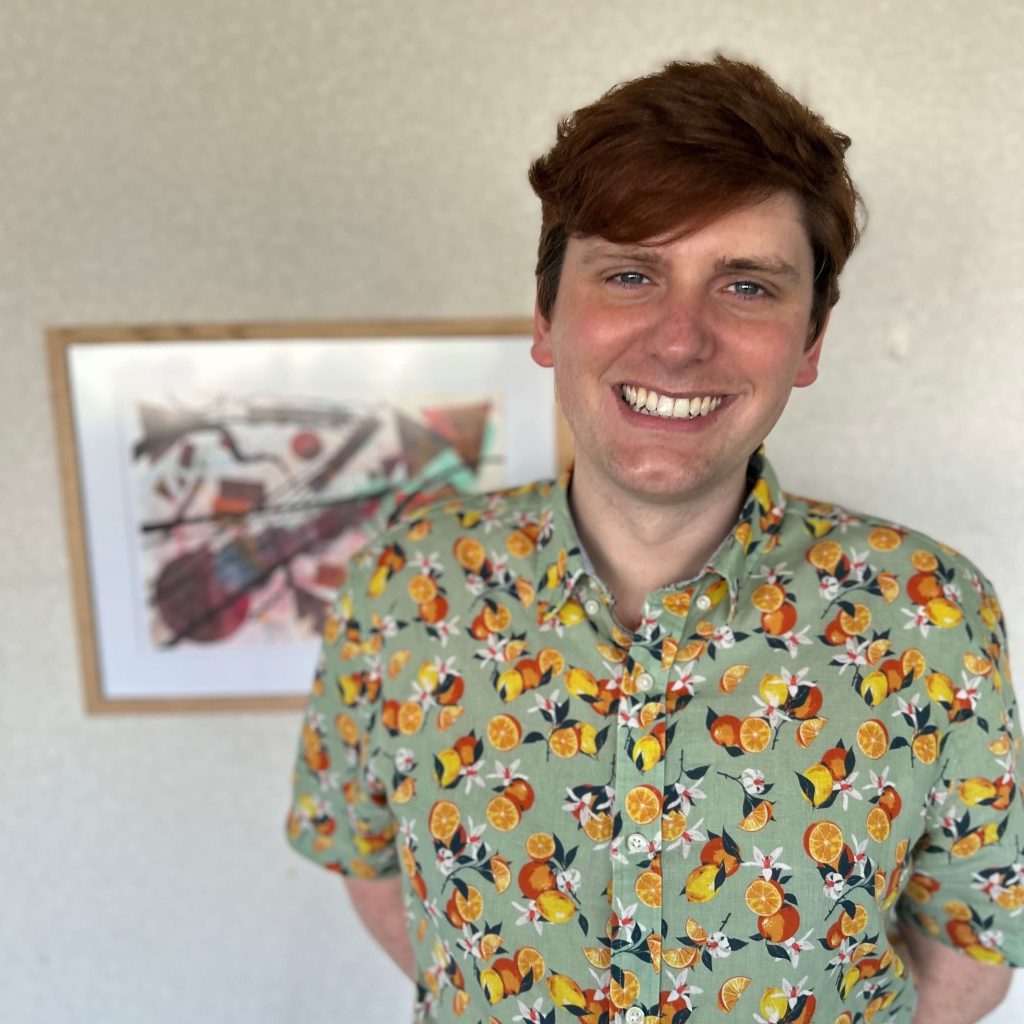
At the time I was a service user myself but the mental health world was not something I had ever considered a place to work. But having been unemployed and on Universal Credit for two and half years I knew the positive impact that being heard can have on a person, and I thought “If I can give that to someone, then it’ll be worth it.” To my delight (and one DBS check later), I was in the role.
I had thought that once I got the job, all my stresses would alleviate. Unfortunately, I hadn’t fully reckoned with the personal anxieties I would have to deal with to do the job the best I could. I hadn’t accounted for exactly how much time I would spend on the phone with people, and for someone who until very recently had a fear of phone calls, that felt like a tall order. The idea of meeting people in public also proved to be anxiety inducing; spending two and half years unemployed with little luck in job applications can prove to be isolating, so to go from one end of the spectrum to another felt like jumping straight out of the frying pan and into the fire.
Initially I was nervous about joining NHS multi-disciplinary meetings with experienced Clinicians and Psychologists made it impossible not to have imposter syndrome; How could I help people more than the actual NHS could? Fortunately, the South Warwickshire Community Mental Health Team was very friendly and accommodating, so the initial nerves subsided fast. As time went on, I became familiar with how the NHS operates, and the CMHT understood what REACH’s goals were, so a mutual respect began to form.
One case that stuck with me during the role was K., who was referred to REACH for self-neglect and overall low mood. They were struggling with an ongoing identity crisis after a string of abusive relationships and were also worn down by caring for multiple children largely by themself.
Early sessions focused on employment; however, financial pressure soon surfaced as a much deeper issue: their partner had hidden a credit card debt from them that exceeded £20k, which intensified K.’s anxiety and ability to trust others. Our face-to-face meeting offered emotional support and practical tools and encouraged them to find a hobby ‘just for me’. This opened the door to K. confronted their partner about the debt, to communicating honestly and setting boundaries, and it opened the door to them tackling their problems together.
After talking weekly for six months, K. was able to secure a new job, which further boosted their self-confidence, mood, and sleep. Though family challenges persisted, K. began to develop greater resilience, keeps up their new hobbies and self-care, and reported feeling more like themself and hopeful about the future.
It became obvious during my time in this role that one of the biggest issues is social isolation; some people hadn’t readjusted since the COVID lockdowns whereas others simply didn’t know how to make new friends as adults. It certainly is easier said than done! I introduced people to new groups, activities, and social settings, but there’s no guarantee anything will ever come of it. Although, showing up in the first place is a big milestone in itself. Thankfully, as more service users started attending groups I had recommended, more positive feedback came in, and people often couldn’t wait to tell me how much they had enjoyed a group when I next spoke to them.
On some occasions, the opportunity arose to introduce patients living in the same area to each other, to talk about their similar struggles to someone who could relate to it. At first most patients were understandably apprehensive about the idea, but in the end they all were glad they’d agreed to it.
Reflecting upon the time I’ve spent in this job, I can see the achievements that have been made, both by service users and myself personally. During my time with REACH, I’ve worked with 75 people, and the majority reported that they felt better as a result. Of course I can’t take all the credit as the hard work was really done by them. But it is rewarding to know I could play a small part in their journey. For me personally, my self-esteem has grown considerably since I started this job, and I feel much more confident in myself and how I approach other people.
Although Arty-Folks had hoped that REACH as a project would have more longevity, this past year has made me aware of how complex the healthcare systems in the UK can be. Organisations are often held to an incredibly tight budget, and services are often cut or have budgets pulled at short notice. However, I believe working with people on a one-to-one basis is incredibly beneficial because people need a safe space to be heard, to feel validated, to feel that someone is at their side. If we truly want to help people in the long-term, we need to accept this cannot be treated as quick fix; this kind of support takes time and effort from all parties and should be given adequate funds and time to fully thrive.
What I’ll carry forward most is the idea that people don’t usually need someone to fix things for them, they need someone to sit with them while they figure it out themselves. That’s a small shift in how I think about helping people, but it’s changed how I approach almost every conversation, at work and outside of it.
Writing this retrospective has made me realise how much of what I’ve learned at REACH didn’t stay confined to work hours. The patience I had to find for myself on those first anxious phone calls has become patience I extend to other parts of my life. I went into this role thinking I’d be helping others, but if I’m honest, I think I’ve received just as much as I’ve given; a stronger sense of who I am, and proof that the version of me who spent two and a half years feeling unemployable was always capable. Someone just needed to give me the opportunity to prove it to myself, and to them..
As for what’s next for me personally, I don’t have it all mapped out, and I’ve come to be okay with that. What I do know is that I want to keep doing work that puts me in the room with people. Whether that’s staying within peer support, moving into a related role, or something I haven’t come across yet, I’m moving forward with a lot less fear than I had when I first saw the job listing – and that feels like a real achievement.”